
Every angler has days when the water looks perfect and nothing bites. That does not prove the lake is empty, the location is wrong, or your tackle is useless. Fish may be deeper, tighter to cover, feeding on a different size of food, or simply less willing to chase.
The worst response is to change the lure, color, depth, retrieve, and fishing spot all at once. Even if the next cast works, you will not know why. A better approach is to check the simple problems first and change one important variable at a time.
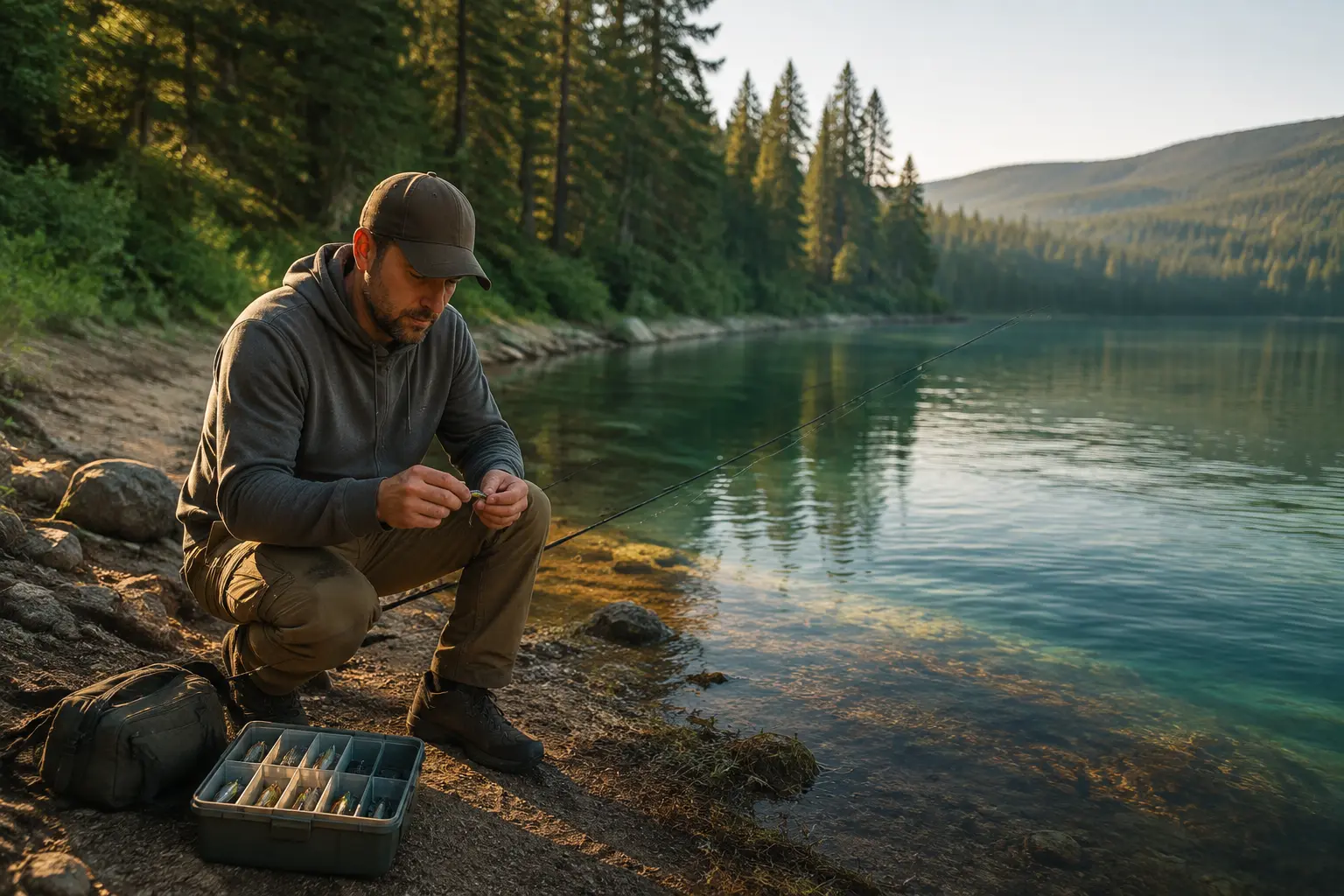
The Quick No-Bite Reset
Use this order before digging through the entire tackle box:
- Check the rigMake sure the hook, bait, lure, knot, and line are working correctly.
- Change depthFish slightly shallower or deeper while keeping the rest of the setup the same.
- Change the presentationAdjust speed or size before relying on a new color.
- Move with a reasonTry the next edge, piece of cover, current seam, or depth change.
This order is not a rule that fits every species and every water. It is a repeatable starting system. It keeps you fishing with a purpose instead of making random changes.
Before Changing Lures, Check That the Rig Works
A damaged or poorly presented rig can waste every cast. Reel in and inspect it closely.
- Check the hook point: It should be exposed and sharp enough to catch lightly on a fingernail. Replace or sharpen a dull or damaged hook.
- Check the bait: Make sure it is still present, fresh enough to use, and allowed on that water.
- Check the lure: Remove weeds, moss, line twists, or debris. Watch the lure beside the bank to confirm that it swims, spins, wobbles, or tracks as intended.
- Check the knot and line: Retie a slipped knot and cut away badly frayed line.
- Check the reel and drag: A loose spool, tangled line, or locked drag can turn the first bite into a missed fish or broken line.
If you are using a worm under a float, confirm that the bobber is not too large, the split shot is not pulling it under, and the bait is not buried in weeds or resting unnoticed on the bottom. The full bobber-and-worm guide explains how to set and read that rig.
1. Change the Depth
Depth is often more important than color. A perfect lure several feet above or below the fish may never be noticed.
With a bobber, move the float in small steps. With a lure, count it down a little longer before retrieving, lift the rod tip to work higher, or use a lure that naturally runs at a different level. With a bottom rig, make sure the bait is actually reaching bottom and is not buried in soft weeds or mud.
Test at least two useful levels before changing the whole setup: close to the surface or shoreline cover, then a deeper edge you can reach safely. Keep track of where the lure was when a bite, follow, bump, or sudden line movement happened.
2. Put the Bait Where Fish Have a Reason to Be
Open water can hold fish, but visible changes give you better targets. From shore, work the edges of:
- Weeds, reeds, lily pads, or other aquatic vegetation
- Docks, pilings, fallen wood, rocks, and shaded banks
- Points, inside turns, small coves, and changes in shoreline shape
- Inlets, outlets, current seams, and areas where moving water meets slower water
- Color changes or drop-offs that may mark a depth transition
Do not cast blindly into heavy snags. Work alongside the cover and learn how close you can fish without losing control of the lure. Also remember that a map or location listing does not prove that every part of a shoreline is open. Use legal public access and follow posted boundaries.
3. Change the Speed—and Add Pauses
A common mistake on a slow day is retrieving faster and faster. Start by slowing down enough to keep the lure working correctly. Add a pause beside cover, after a drop, or partway through the retrieve. Fish sometimes follow before committing.
Slower is not always better. If a slow presentation produces no interest, make a controlled test at a moderate or faster pace. Some fish respond to a lure moving quickly past them. The useful lesson is not “always slow down”; it is to test speed deliberately.
For natural bait, slowing down may mean leaving it in a likely area longer, reducing unnecessary movement, or controlling line slack so you can detect a light bite. In current, allow the bait to move naturally without letting it tumble out of the strike zone too quickly.
4. Try a Smaller Offering
When fish are pecking without getting hooked, following a lure without striking, or feeding on very small prey, try a smaller hook, bait piece, soft plastic, spoon, spinner, or plug.
Match the hook to the bait and the fish’s mouth. A large hook hidden inside a large ball of bait can make light bites difficult to convert. A smaller offering may also fall more slowly and look less demanding to an inactive fish.
Do not automatically use the smallest tackle you own. Thick weeds, strong current, large fish, and long casts may require more weight, stronger line, or a larger presentation. Make the smallest change that still lets you fish effectively and land the target species responsibly.
5. Change Color, Flash, or Sound After the Basics
Color matters, but it is usually easier to overthink than depth, location, and speed. Once the lure is reaching likely fish and moving correctly, test a meaningful contrast:
- In clear water, try a natural pattern or a less aggressive finish.
- In stained water or low light, try stronger contrast, vibration, flash, or a silhouette fish can detect.
- In bright conditions, reduce excessive flash if fish follow but turn away.
- If a noisy lure produces no interest, test a quieter presentation—and reverse the test when quiet lures are ignored.
One shade of green versus another may not be a useful test. A small natural bait versus a larger, high-contrast bait is a change you can actually learn from. If you need help choosing lure styles, use the Beginner’s Guide to Fishing Lures.
6. Check Bait Condition, Hook Size, and Line Control
Fresh bait should stay on the hook and present naturally. Replace bait that is missing, washed out, dried out, or spinning unnaturally. Where live or natural bait is used, follow every transport, species, and disposal rule; never dump leftover bait at the water.
Keep the hook point clear. If small fish repeatedly steal bait, use a smaller piece and make sure the hook size fits. If you feel bumps but cannot connect, remove excess slack and keep the rod in a position that allows a controlled hook set.
Line can also change a presentation. Heavy or badly coiled line may reduce lure action or make light bites difficult to detect. That does not mean you should automatically switch to extremely light line. Match line strength to the cover, current, lure weight, and size of fish you could reasonably encounter.
7. Account for Light, Weather, Water, and Fishing Pressure
Fish activity changes. Light level, water temperature, dissolved oxygen, wind, current, recent weather, available food, and fishing pressure can all affect where fish hold and how readily they feed. You do not need to predict every factor. Observe what has changed and adjust where or how you fish.
- On a bright day, shade, deeper edges, cover, or a quieter presentation may deserve a test.
- Wind can move surface water and food, but it can also make casting and boat control harder. Fish only where conditions remain safe.
- Very warm or very cold water may reduce how far some fish will chase. A slower, closer presentation can be worth trying.
- At a heavily fished access point, try a different legal casting angle, presentation, or part of the shoreline instead of assuming the whole water is unproductive.
Dawn and evening are often popular fishing periods, but there is no universal best hour. Species, season, water, and local conditions matter. A safe, legal time when you can fish carefully is more useful than a “magic” time copied from someone else.
8. Know When to Move
Staying patient is useful only when your casts are teaching you something. After several clean presentations at more than one depth or speed, move to the next reachable feature. That might be the other side of a dock, the next weed edge, a nearby point, a shaded bank, or a depth change—not a random place miles away.
Move sooner with search lures that cover water quickly. Give natural bait more time when scent, current, and stationary feeding are part of the method. If a location is crowded, unsafe, closed, or outside public access, choose another legal area.
The Fish Finder Outdoors fishing location directory lists waters with official fishing and public-access evidence. It does not promise fish or rank places as “best.” Use it to identify options, then verify current rules, closures, conditions, and access with the responsible agency before leaving home.
Starting Adjustments for Common Freshwater Fishing
| Fishing situation | First things to test | Useful clue |
|---|---|---|
| Panfish near shore | Use a smaller hook and bait piece; change bobber depth; cast beside shade, docks, or weed edges. | Quick twitches without a full bite often suggest small fish pecking at too much bait. |
| Stocked trout | Test a different depth; slow the presentation; try a smaller spinner, spoon, or legal bait. | Following fish may respond to a pause, speed change, or smaller profile. |
| Bass around cover | Work the outside edge first; vary retrieve speed; try a smaller or less aggressive presentation. | A bump, flash, or follow identifies an area worth fishing again from another angle. |
| Catfish on the bottom | Confirm the bait reaches bottom; use fresh legal bait; try the edge of current or a depth change. | A bait buried in weeds or moved out of position cannot fish effectively. |
| Any lure collecting weeds | Change casting angle, retrieve height, lure style, or hook protection. | Remove every strand of vegetation before the next cast. |
These are starting points, not promises. Fish behavior and legal methods vary by species, season, water, and region.
What Not to Do on a Slow Day
- Do not change everything at once. You lose the chance to learn which adjustment mattered.
- Do not assume a fish-finder screen or online report guarantees a bite. A device can show targets and a report can describe the past, but neither makes fish feed.
- Do not trespass to reach better-looking water. Stay within confirmed public access and posted boundaries.
- Do not ignore the rules because the fishing is slow. Bait, hook, season, harvest, and area restrictions still apply.
- Do not cast into unsafe weather. If you hear thunder, stop and move to a substantial building or hard-topped vehicle.
- Do not treat an empty catch as a wasted trip. A careful test of depth, cover, speed, and size gives you useful information for the next visit.
A Repeatable 20-Cast Learning Plan
This is a practice framework, not a guarantee and not a required number of casts. It simply prevents random tackle changes:
- Casts 1–5: Fish the most obvious edge or cover with your starting presentation.
- Casts 6–10: Keep the same offering but change depth or retrieve speed.
- Casts 11–15: Try a meaningfully smaller, quieter, or higher-contrast option.
- Casts 16–20: Move to the next legal piece of cover or depth change and repeat the best presentation.
If you feel a bite, see a follow, catch weeds, touch bottom, or notice a depth change, count that as information. Write down the location, weather, water clarity, successful depth, lure or bait, and time. A simple record turns slow days into better future decisions.
Keep the Adjustment Legal and Safe
Before changing from a lure to natural bait, adding a second hook, keeping a fish, or moving to a different section of water, check the current regulations. Special rules can apply to a particular season, stream reach, species, bait, hook type, or access area.
Weather is also a hard limit. Strong current, cold water, steep banks, ice, wind, heat, wildfire conditions, and lightning can turn a fishing adjustment into a bad decision. A fish is never worth entering closed water or taking an unsafe route.
Use the Public Fishing Spots and Maps Guide to understand what maps can and cannot prove, and use the official source links in the location directory to recheck the water before a trip.
Why Fish Aren’t Biting FAQ
What should I change first when fish are not biting?
First confirm that the hook, bait, lure, knot, and line are working correctly. Then change depth or casting location before changing several pieces of tackle at once.
How long should I fish one spot without a bite?
There is no universal time. Make several controlled casts through likely water at more than one depth or retrieve speed. If those casts teach you nothing, move to the next piece of cover, depth change, or shoreline feature.
Should I use a smaller lure when fish are not biting?
Often it is worth trying a smaller lure or bait after checking depth and location. A smaller offering can be easier for inactive fish or small-mouthed species to take, but it cannot help if no fish can see or reach it.
Does not getting bites mean there are no fish?
No. Fish may be present but holding at another depth, relating to different cover, feeding on something else, or simply less active. A slow period is not proof that the water has no fish.
Is early morning always the best time to fish?
Early morning can be productive, but there is no best time for every species, season, and water. Light, temperature, weather, food, fishing pressure, and local conditions all influence activity.
Finish the Day With a Better Plan
When fish are not biting, start with the variables that decide whether fish can encounter the offering: rig condition, depth, and location. Then test speed, size, contrast, and bait condition. Move when the current spot stops teaching you anything.
You will still have fishless days. Every angler does. The goal of this system is not to promise a catch; it is to replace guessing with useful observations and give each change a fair test.