
Fall is an excellent time to camp. Campgrounds may be quieter, the air feels crisp, and a hot breakfast beside a lake is hard to beat. It is also the season when a sunny afternoon can turn into a cold, wet night that exposes every mistake you made while packing.
You do not need a trailer full of expensive equipment to enjoy an autumn campsite. You do need a realistic weather plan, a dry place to sleep, and an escape plan if conditions turn ugly. Here is a practical starting point for beginners.
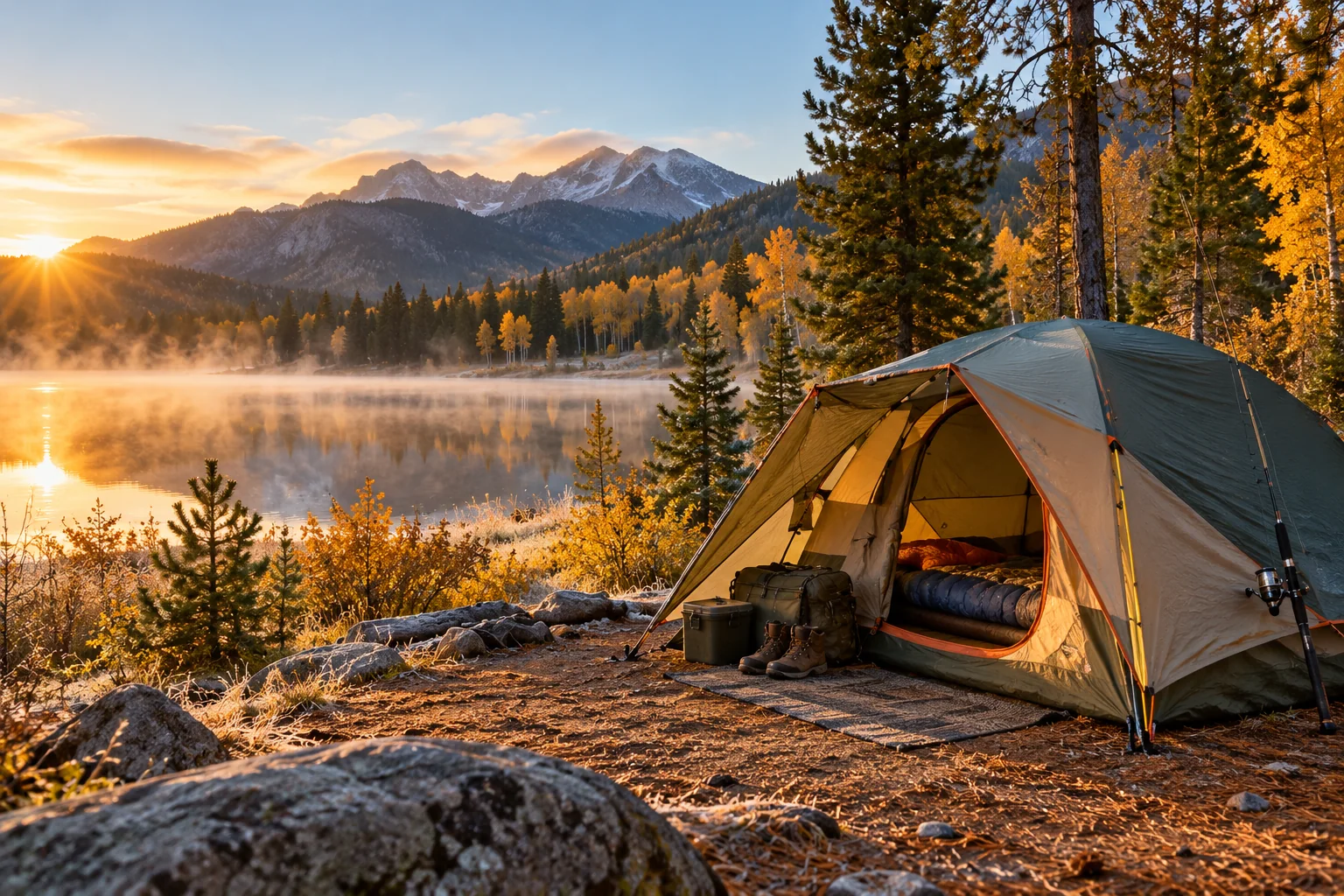
1. Plan for the coldest part of the trip, not the warmest
The forecast that matters most may be the temperature just before sunrise, when you have been lying still for hours. Check the overnight low, wind, precipitation, and any weather alerts for your actual campground or nearby elevation—not just the town you drive through on the way.
The National Weather Service recommends checking forecasts before cold-weather trips. Recheck shortly before you leave, because fall storms can move quickly. Confirm the campground remains open, the access road is passable, and any fire or seasonal restrictions with the land manager.
For your first chilly trip, choose a campground with a reliable way out and a backup destination. If heavy snow, freezing rain, strong winds, or conditions beyond your equipment are forecast, pick another weekend. The woods will still be there.
2. Choose a campsite that helps you stay dry
A lovely patch of grass can become a puddle overnight. Look for a permitted, established, well-drained tent spot with stable ground and some shelter from the prevailing wind. Avoid low dips where rainwater collects, dry washes that could flood, and areas underneath dead or damaged branches.
Pitch the tent properly, tension the rainfly, and stake out the guylines before dark. Do not dig trenches or cut vegetation to fix a bad site. If you need help choosing a practical place, read our guide to choosing a campsite first.
3. Start your warm sleep system with what is underneath you
Beginners often spend time shopping for a warmer sleeping bag and forget the ground. An appropriate insulated sleeping pad reduces heat loss into cold soil. Choose a pad with insulation suited to the expected temperatures; its R-value indicates resistance to heat flow. A soft air mattress without meaningful insulation can leave you cold even with a thick bag.
Pair the pad with a sleeping bag suited to the actual overnight low, allowing some margin for individual comfort. Check whether the listed number is a comfort, limit, or other rating rather than assuming all temperature labels mean the same thing. The National Park Service camping gear guide recommends selecting sleeping bags and pads for conditions and comfort.
Keep a dedicated dry set of sleep clothes and socks in a waterproof bag. Change into them before bedtime rather than climbing into your bag in the damp shirt you wore all afternoon. A warm hat can be useful, too.
4. Dress in layers and manage sweat
When you are walking, setting up camp, or carrying firewood, you may feel warm. Stop moving in damp clothing and that feeling can disappear in a hurry.
- Base layer: Moisture-wicking synthetic or wool fabric against your skin.
- Warm layer: Fleece or another insulating layer for stops and colder evenings.
- Outer layer: A wind-resistant, weather-appropriate shell that can handle rain.
- Extras: Dry socks, gloves, a warm hat, and backup clothing sealed against moisture.
Avoid depending on cotton clothing when rain or heavy sweating is likely; wet cotton dries slowly. Adjust layers before you start sweating heavily. The National Weather Service cold-weather guidance emphasizes layers, shelter from wind, and changing out of wet clothes.
5. Keep condensation and wet gear under control
Even when it is not raining, moisture from breathing and damp gear can collect inside a tent. Use the tent’s intended ventilation, keep the rainfly set up correctly, and avoid pressing your sleeping bag against wet tent walls. A fully zipped, unventilated tent is not a substitute for a warmer sleeping bag.
Give wet boots and rain jackets their own area, away from your dry bedding. Store spare layers in waterproof bags. If you have to pack up a damp tent, dry it as soon as you get home to prevent mildew.
6. Eat well—without trying to heat the tent
Cold weather makes a hot meal appealing, but campfires are not a dependable heating plan. Fire restrictions and wet fuel can change your dinner options, so bring easy food that does not require complicated cooking.
Never run a stove, charcoal grill, fuel-burning lantern, or portable fuel heater inside a tent or enclosed sleeping area. These appliances can create deadly carbon monoxide buildup and add fire risk; partially unzipping the door does not make them safe. The CDC explicitly warns against using camping stoves and charcoal devices inside tents. Cook outdoors in accordance with the device instructions and campground rules.
If your nighttime warmth depends on running a heater in a tent, rethink the gear or the trip instead.
7. Give yourself more daylight than you think you need
Fall evenings arrive earlier. Aim to set up the tent and organize food, bedding, and the bathroom route while you can still see what you are doing. Test headlamps before leaving and bring spare batteries or a backup light. If you plan to fish near camp, keep your return route simple and avoid unfamiliar shoreline hazards after sunset.
Tell someone where you are going and when you expect to return. Keep the vehicle accessible if you need to leave early, and watch for weather or road changes that may affect the trip.
A simple fall camping packing checklist
| Bring | Why it matters |
|---|---|
| Weather-ready tent with rainfly and stakes | Protection from wind and rain; set it up before dark |
| Insulated sleeping pad and suitable sleeping bag | Reduces heat loss to cold ground and air |
| Dry sleep clothes, spare socks, hat and gloves | Backup warmth if daytime clothes get damp |
| Layering clothes and waterproof outer shell | Adjust for changing weather and activity |
| Headlamp, extra power and basic first aid | Shorter daylight and unexpected problems |
| Water, easy meals and a safe outdoor cooking plan | Stay fueled without depending on a campfire |
| Forecast, campground rules and an exit plan | Know when to change course |
8. Know when comfort has turned into a safety problem
Persistent shivering, clumsiness, unusual exhaustion, confusion, or slurred speech can be warning signs of dangerous cold exposure. Do not try to tough it out. Get the person to shelter, replace wet clothing with dry layers when possible, and seek urgent medical help if hypothermia is suspected. The National Weather Service provides advice on cold injuries and when to seek help.
A successful camping trip is not measured by how miserable you were willing to become. Sometimes success means going home warm, dry, and ready to try again.
Make room for fishing—after the basics are covered
If fishing is part of the trip, pack dry gloves and a spare layer for standing still beside the water in the morning. Use the FFO Fishing Locations Directory to research access and check current fishing regulations before leaving. And if this is your first fishing trip too, our free First Fishing Trip Checklist can help you pack without bringing the entire tackle aisle.
Need basic gear ideas? Visit Camp Fishing Gear for camping essentials and outdoor resources. Choose the gear for your forecast and location, not just the product photo.