
A spinning reel is one of the best all-around choices for a beginner fisherman. It works for trout, bass, panfish, catfish, and plenty of other freshwater species, and it can handle everything from a worm under a bobber to small jigs, spinners, and crankbaits.
There’s just one problem: the first time you pick one up, the bail, loose line, and finger-release business can make something as simple as throwing a lure into the water seem unnecessarily complicated.
It isn’t. Once you understand what your finger and the bail are actually doing, casting a spinning reel becomes a simple motion you can repeat all day.
The Quick Answer: How Do You Cast a Spinning Reel?
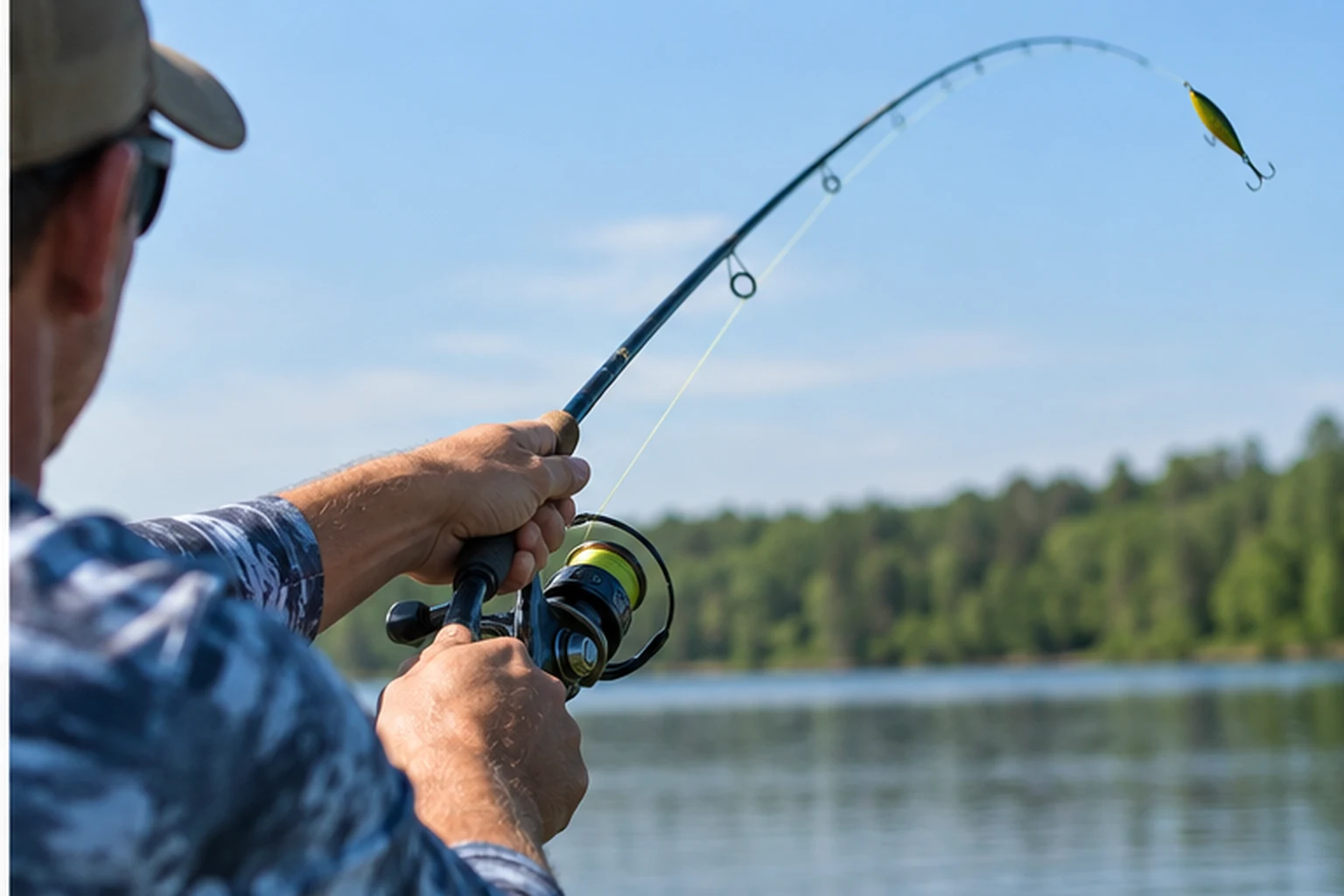
Hold the rod with the spinning reel hanging underneath it. Hook the fishing line with your index finger and hold it lightly against the rod. Open the bail with your other hand. Bring the rod smoothly behind you, then swing it forward toward your target. Release the line from your finger as the rod comes forward. Let the lure carry the line off the spool, then close the bail by hand.
That’s the entire cast. The rest is timing, control, and practice.
Know What the Bail Does Before You Cast
The bail is the curved wire arm that wraps around the spool of a spinning reel.
When the bail is closed, it guides fishing line back onto the spool while you reel. When the bail is open, line can come freely off the spool. That is what allows you to cast.
Before opening the bail, hold the fishing line with your index finger. Otherwise, the line may simply start falling off the reel.
Think of your finger as the temporary line brake: finger holds line → bail opens → finger releases line during the cast.
How Much Line Should Hang From the Rod Tip?
Before casting, let your bait, rig, or lure hang roughly 10 to 18 inches below the rod tip. It does not need to be measured every time. You simply want enough line hanging down to let the weight of the lure help load the rod during the casting motion.
Too little line can make the cast feel stiff. Way too much line swinging around makes the cast harder to control and gives hooks more opportunities to find things they were never invited to meet.
How to Cast a Spinning Reel Step by Step
1. Face the direction you want to cast
Start by looking at your target. Beginners often watch the reel instead of watching where the lure is supposed to go. Pick an open area of water and aim for a general zone rather than trying to land the lure beside one particular rock.
2. Make sure the area behind you is clear
Before bringing the rod backward, look behind and above you. Check for people, trees, bushes, power lines, pets, picnic tables, and anything else that should not have a fishing hook launched toward it. Casting safety matters more than casting distance.
3. Hold the line with your index finger
Grip the rod comfortably with the spinning reel hanging underneath it. Reach your index finger toward the fishing line and pull the line lightly against the rod or hold it in the crook of your finger. You only need enough pressure to stop the line from moving. Do not wrap the line around your finger.
4. Open the bail
While your index finger continues holding the line, use your other hand to flip the bail open. The reel is now ready to cast. Keep your finger on the line until you actually make the cast.
5. Bring the rod back smoothly
Move the rod backward over your dominant shoulder. You do not need a giant baseball-pitch windup. A controlled motion works better.
Viewed from the side, think of bringing the rod back to roughly the 2 o’clock position. The weight of the lure or rig helps bend—or load—the rod slightly.
6. Move the rod forward and release the line
Bring the rod forward smoothly toward your target, finishing around the 10 o’clock position. As the rod moves through the forward part of the cast, straighten your index finger and release the line. The lure’s momentum will pull fishing line from the stationary spool.
If the lure smacks into the water a few feet in front of you, you probably released the line too late. If the lure sails too high, you probably released too early. Do not start swinging harder. Adjust the timing of your release.
7. Point the rod toward the target
After releasing the line, allow the rod to continue forward naturally. Finish with the rod generally pointed toward where you cast. That follow-through helps keep the cast smooth and controlled.
8. Close the bail by hand
Once the lure lands, close the bail with your hand. Many spinning reels will also close the bail when you turn the handle, but manually closing it gives you better control over the line.
Before reeling, make sure the line is seated correctly in the line roller and is not wrapped loosely around the spool.
Distance Should Not Be Your First Goal
New anglers often think a good cast means throwing a lure as far as humanly possible. It doesn’t. A 30-foot cast that lands where you want it is more useful than a 70-foot cast that lands in a tree.
Start with short casts. Learn to release the line cleanly and make the lure travel in the general direction you intended. Then gradually add distance. Fishing rarely awards bonus points for throwing your lure into the next county.
Practice Without a Hook
One of the easiest ways to learn casting is to practice somewhere other than the water. An open grassy area gives you room to concentrate on the motion without worrying about catching fish at the same time.
Use a casting plug if you have one, or another safe hookless practice weight that suits the rod. Keep well away from people, vehicles, windows, pets, and anything else you might damage.
Place a bucket, hoop, or other large target on the ground. Do not worry about hitting the center. Try to land the practice weight somewhere near it. As you improve, move farther away or make the target smaller.
Common Casting Problems and What They Mean
Why does my lure keep hitting the water right in front of me?
You are probably releasing the line too late. Try releasing slightly earlier on your next cast. Make one small timing adjustment rather than completely changing your motion.
Why does my lure go straight up?
You are probably releasing the line too early. Keep the line against your finger slightly longer during the forward cast.
Why does the line come off the reel in big loops?
Loose line on a spinning reel can create loops, tangles, and frustrating knots. Make sure the spool is filled properly and is not severely overfilled. Keep reasonable tension on the line when retrieving, particularly after a cast where the line landed loosely.
If you see loose loops buried underneath tighter line, fix them before making another cast. Ignoring one loose loop has a remarkable ability to turn it into twelve loose loops.
Why won’t my spinning reel cast very far?
Before assuming your technique is terrible, check the equipment. A lure that is extremely light for the rod may not cast well. Line that is too heavy for the reel or lure can also reduce casting performance. An overfilled, underfilled, twisted, or badly tangled spool can cause problems as well.
Check the recommended lure-weight and line ranges printed on your rod and reel when available. Then focus on smooth acceleration, a clean release, and a natural follow-through.
Use the Rod to Cast, Not Your Entire Body
You do not need to throw your shoulder into a normal freshwater cast. Keep your grip comfortable and your motion controlled. Your forearm, wrist, rod, and lure weight do most of the work.
A relaxed repeatable cast is easier on you and usually more accurate than trying to launch every lure like you are competing in a distance contest.
Casting a Bobber and Worm
If you are using the basic setup from our How to Rig a Bobber and Worm for Beginner Fishing guide, use the same spinning-reel casting method but make the motion especially smooth.
A bobber, split shot, hook, and worm are several pieces moving together. Trying to snap the rod aggressively can make the rig tumble through the air, twist the line, or throw your bait off. Use a controlled cast and let the weight of the rig do the work.
Casting Lightweight Lures
Small trout spinners, tiny jigs, and lightweight lures sometimes frustrate beginners because they do not cast as far as heavier tackle. Do not immediately solve that problem by casting harder.
The rod, fishing line, and lure need to work together. Light lures usually perform better with appropriately light fishing line and a rod designed to cast lighter weights. The Beginner Fishing Gear guide can help you match a simple setup.
Accuracy Comes From Repetition
Once you can make a basic cast consistently, start working on accuracy. Choose visible targets on the water: the edge of a weed bed, the outside of a dock, a patch of shade, or open water beside submerged structure.
Aim near cover rather than directly into it while you are learning. You will eventually hang a lure in a tree. Every fisherman does. There is no reason to begin that tradition earlier than necessary.
Don’t Forget What Happens After the Cast
Casting gets your bait or lure into the water. It does not catch the fish by itself.
If you are using bait beneath a bobber, watch the float and maintain enough line control to respond when a fish takes the bait. If you are using a lure, begin the appropriate retrieve after the lure reaches the depth you want.
If nothing happens after repeated casts, do not assume you need to cast farther. Change the depth, location, speed, or presentation. Our Why Fish Aren’t Biting: 8 Smart Changes to Try Before You Give Up guide walks through those adjustments.
Common Beginner Spinning-Reel Casting Mistakes
- Releasing the line too early or too late.
- Using far more force than necessary.
- Forgetting to open the bail.
- Letting the line become loose on the spool.
- Trying to cast too close to trees, power lines, or other people.
- Focusing entirely on distance instead of control.
None of those problems mean you cannot cast. They mean you are learning. Fix one thing at a time.
Spinning Reel Casting FAQ
Is a spinning reel good for beginners?
Yes. Spinning reels are versatile and work well with many freshwater baits and lures. A spincast reel may feel simpler for a very first cast, but learning an open-face spinning reel gives a beginner a setup that can grow with them.
Should the spinning reel be above or below the rod?
A spinning reel hangs underneath the fishing rod while you hold and use it.
Which finger releases the fishing line?
Most anglers use the index finger of the hand holding the rod. The finger holds the line before the cast and releases it as the rod moves forward.
Do I open the bail before casting?
Yes. Hold the line with your finger first, then open the bail. Release the fishing line from your finger during the forward cast.
Should I close the bail by hand?
Closing the bail manually is a good habit. It gives you control over the line before you begin retrieving and can help you spot loose line before it becomes a problem.
How hard should I cast?
Not very hard. Smooth timing is more important than force. Start with shorter, controlled casts and add distance as your technique improves.
Why does my lure always go left or right?
Check your release timing and make sure the rod is traveling toward your target instead of sweeping sideways across your body. Start with an open target and concentrate on repeating the same simple motion.
Your First Casting Practice Session
Do not try to master everything at once. Learn this sequence:
Hold the line → open the bail → bring the rod back → move forward → release the line → follow through → close the bail.
Repeat it until you no longer need to think about every step. That is when fishing starts getting easier. You stop concentrating on the reel and start concentrating on where the fish might actually be.
Learn the Cast, Then Start Fishing
Nobody begins by dropping a lure perfectly beside a dock post from forty yards away. Start with an open area. Make short casts. Pay attention to when you release the line. Make small corrections until the motion becomes comfortable.
If you are completely new to fishing, start with Beginner Fishing: The Basics You Need to Get Started. When you are ready to put bait in the water, follow How to Rig a Bobber and Worm for Beginner Fishing.
When you are ready to find somewhere to practice, use the Fish Finder Outdoors Fishing Locations Directory to research public fishing waters and follow the linked official sources for current access and fishing regulations.