Camping for the first time should feel like a manageable outdoor trip, not an audition for a survival show. You do not need the most expensive tent in the store, a portable kitchen with twelve burners, or enough emergency equipment to establish a small government.
You need a legal place to camp, dependable shelter, a way to sleep warm and dry, enough food and safe water, a simple plan, and the good sense to clean up after yourself. If the trip includes fishing, you also need the required license, current regulations, a simple rod and reel, and a small amount of tackle you actually understand.
The goal of your first trip is not to prove how rugged you are. The goal is to come home safe, learn what worked, fix what did not, and want to go again.
The Quick Answer: What Should a First-Time Camper Do?
- Choose an easy tripStart with one or two nights at a legal place with straightforward access.
- Check current rulesConfirm camping, fire, food, fishing, road, and closure information.
- Test the basicsPractice with the tent, stove, lights, water system, and fishing gear at home.
- Leave it cleanControl food, waste, noise, trash, fishing line, and campfire impacts.
Pack for the nighttime forecast, arrive with enough daylight to inspect and organize the site, and tell someone where you are going and when you expect to return. Everything else builds on those habits.
Start With an Easy Trip, Not an Epic One
Your first camping trip is the wrong time to drive six hours down an unknown dirt road, arrive after dark, and discover that your bargain tent contains instructions written in the ancient language of tiny diagrams.
Start with one or two nights. Choose a destination close enough that a forgotten item, equipment problem, or sudden weather change does not automatically become a crisis. Match the road, campsite, weather, elevation, activities, and distance from help to your group’s experience and abilities.
An established campground is often the easiest place to learn because the boundaries, roads, toilets, water information, reservations, and fire rules are usually clearer. Dispersed camping can be wonderful, but it requires more judgment, more self-sufficiency, and a stronger waste plan.
If fishing is part of the trip, do not choose a campsite only because the lake looks pretty in a photograph. Confirm that the water is a documented fishing location, that legal public access exists, and that the regulations are current. The Fish Finder Outdoors fishing location directory can help identify options with official fishing and public-access evidence, but it does not verify camping at those waters.
Check the Rules Before You Pack the Vehicle
Camping and fishing rules can change by location, season, weather, and emergency order. Check the agency that manages the land and, if you plan to fish, the agency that manages the fishery shortly before the trip.
Confirm:
- Whether camping is allowed and whether a reservation, permit, fee, or check-in is required
- Site boundaries, stay limits, parking rules, vehicle restrictions, and quiet hours
- Current road, trail, campground, wildfire, flood, weather, and emergency closures
- Campfire restrictions and whether a particular stove, fuel type, fire pan, or permit is required
- Food, garbage, cooler, and scented-item storage rules in wildlife country
- Whether drinking water is available and what treatment backup you need
- Human-waste, toilet-paper, grey-water, pet, and generator rules
- Fishing-license requirements and water-specific season, bait, lure, hook, harvest, and access rules
A fishing license does not make every bait, hook, or method legal on every water. Owning a lighter does not make a campfire legal during a restriction. Check the exact place instead of assuming that a rule from another campground, county, or lake applies.
Keep Your Camping Gear Simple and Dependable
Beginners often buy equipment before they understand what problem it is supposed to solve. Outdoor marketing is very good at making a folding titanium seasoning shelf feel like a life-support system. Focus first on shelter, sleep, water, food, light, clothing, safety, and sanitation.
Shelter
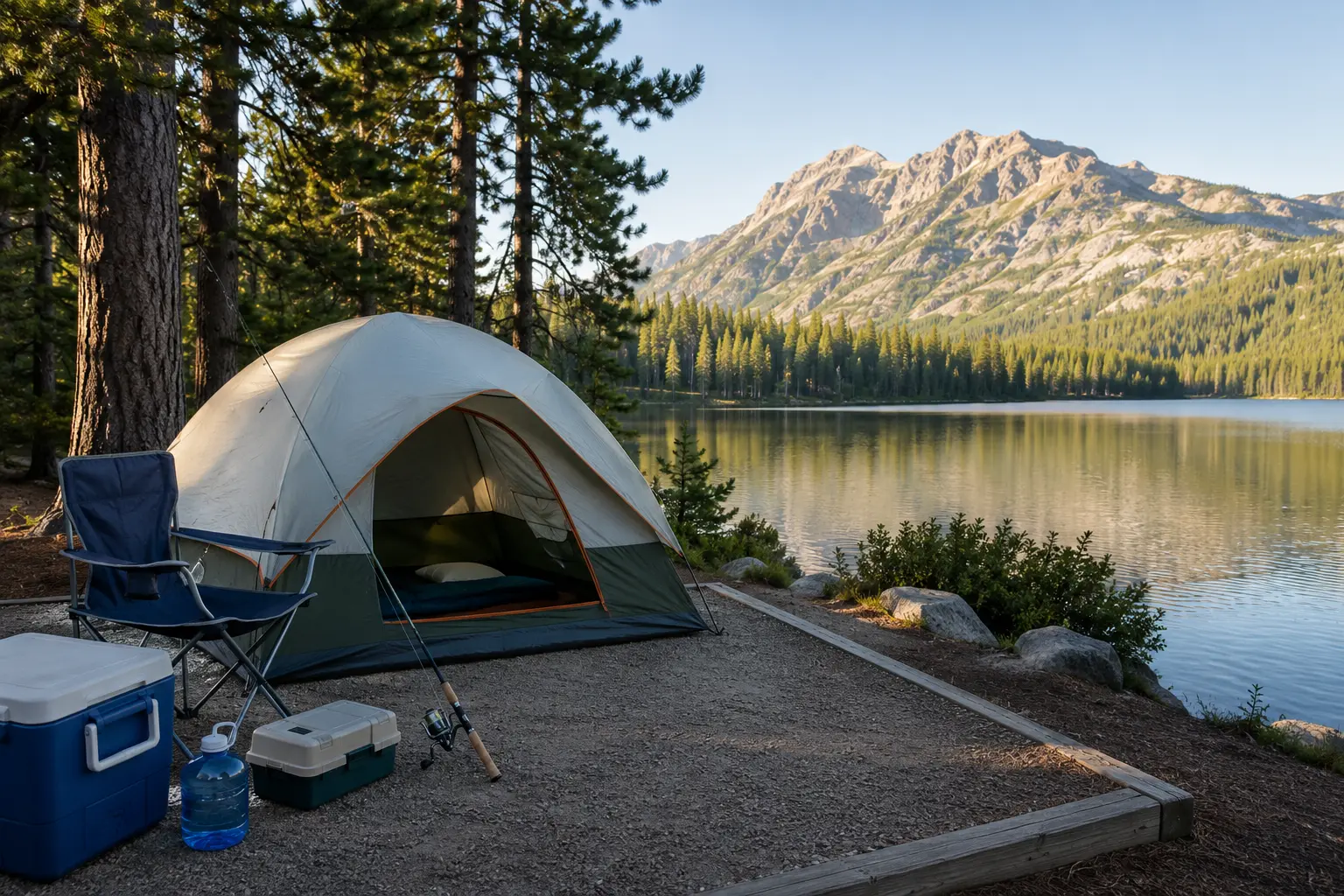
Bring a tent sized for the people and gear that will actually be inside it. Pack every pole, stake, rainfly, guyline, and required footprint or groundsheet. A groundsheet should not extend beyond the tent floor, where exposed material can collect rain and direct it underneath you.
Practice setting up the tent at home. Check that the poles connect correctly, the zippers work, the rainfly reaches the proper corners, and the stakes and guylines are present. Doing this once in the yard is far easier than learning in wind or darkness.
Sleep system
A sleeping bag is only part of the system. You also need insulation beneath you. A suitable sleeping pad reduces heat loss to the ground and improves comfort. Bring sleepwear and layers appropriate for the expected nighttime conditions, not only the pleasant afternoon temperature.
Poor sleep is not just uncomfortable. It makes people impatient, careless, and much less enthusiastic about getting up early to fish.
Drinking water
Bring enough drinking water unless the campground or land manager confirms that a potable source is operating. Natural water can look clean and still contain germs. If you may need to use lake, river, or stream water, learn an appropriate treatment method before the trip and carry the equipment and backup it requires.
Do not assume that one portable filter removes every possible contaminant. Follow the manufacturer’s instructions and current public-health guidance, and use another water source when chemical or toxin contamination is possible.
Food and cooking
Keep the first menu easy. Choose meals with little preparation and cleanup. Bring a legal stove, correct fuel, ignition, cookware, utensils, a cooler when needed, sealed food storage, dishwashing supplies, and dedicated trash bags.
Store food, garbage, pet food, toiletries, and scented items exactly as the local wildlife rules require. Do not leave scraps in the fire ring or toss grease behind a bush. Teaching wildlife to associate campsites with food can end badly for future campers and the animal.
Light, clothing, and safety
Bring a headlamp or flashlight for each person, spare batteries or a charging plan, rain protection, layered clothing, sun and insect protection, a first-aid kit, necessary medications, maps or downloaded navigation, and a dependable communication plan for the location.
Check the forecast for the campsite, not only the weather at home. Know where you would go during lightning, wildfire, flooding, high wind, or another emergency. A tent and an open picnic shelter are not safe lightning shelters; move to a substantial enclosed building or hard-topped vehicle when available.
Pack a Small, Useful Fishing Kit
Camping near water and forgetting the fishing gear is the outdoor equivalent of bringing a fork to a soup contest. Put the fishing equipment on its own checklist.
For a simple freshwater trip, consider:
- One spinning or spincast rod-and-reel combo you can use confidently
- Line appropriate for the rod, target fish, cover, and conditions
- A few hooks, split shot, bobbers, and swivels
- Locally legal bait or two or three simple lures
- Needle-nose pliers or forceps and line cutters
- A small landing net when appropriate
- The required license and current regulations for the exact water
- A measuring tool and harvest supplies only if you may legally keep fish
- A small container for clipped line and damaged tackle
You do not need six rods leaning against a tree like a sporting-goods display. One familiar setup and a small tackle box can be enough. If you need help choosing the basics, read Fishing Gear for Beginners.
Arrive Early and Set Up in the Right Order
Arrive with plenty of daylight. Walk the site before unloading everything. Look up and around for dead branches, unstable trees, signs of flooding, drainage problems, sharp objects, animal activity, wind exposure, fire hazards, and campsite boundaries.
Then set up in this order:
- Choose the tent location. Use the designated tent pad or an existing durable surface permitted by the land manager. Avoid low spots, drainage paths, new vegetation, unstable trees, and unapproved shoreline areas.
- Pitch the shelter completely. Install the rainfly and secure the tent even if the sky currently looks friendly. Weather is allowed to change its mind.
- Build the sleep system. Put pads, sleeping bags, and dry nighttime clothing inside before darkness.
- Organize food and water. Follow local storage requirements and separate cooking from sleeping as required.
- Locate sanitation facilities or prepare the legal waste system. Do not wait until urgency becomes the trip leader.
- Prepare any fishing gear. Rig in daylight, review the rules, and identify a legal route to the water that does not damage shoreline vegetation or block other users.
Once shelter, sleep, food, water, and sanitation are under control, the rest of the trip becomes easier.
Make the First Fishing Session Easy
Your first camping trip is not the time to test seventeen fishing techniques. Choose one or two simple methods that are legal for the water.
A bobber-and-bait rig can make bites easy to see where bait is allowed. If you prefer artificial lures, an inline spinner, casting spoon, or small jig can cover water without a large tackle collection. The Beginner’s Guide to Fishing Lures explains 35 freshwater lure types, and the no-bite troubleshooting guide gives you an adjustment order when the water stays quiet.
Keep the first goal realistic: make safe casts, avoid tangles, watch the water, and learn. Catching a fish is excellent. Learning what did not work is still useful information.
If you catch a fish you plan to release, wet your hands, minimize handling and air exposure, and avoid dragging it across dry ground. If keeping fish, identify the species, follow every harvest rule, and cool the catch promptly and safely.
Handle Toilets, Dishes, and Trash Correctly
Use provided toilets whenever available. Where another human-waste method is allowed, follow the land manager’s current instructions for distance, depth, toilet paper, and pack-out. Rocky, frozen, desert, alpine, shoreline, and heavily used places may require different treatment.
Do not wash dishes in a lake or stream. Carry water to a legal wash area away from natural water, strain out food particles, pack those particles out, and dispose of grey water only as local rules allow. “Biodegradable” does not mean soap belongs in the lake.
Keep one trash bag in camp and a small trash container with the fishing gear. Fishing line, hooks, bait packaging, foil corners, bottle caps, food scraps, and tiny plastic pieces all count as trash. Inspect the cooking area, tent pad, parking spot, fire ring, and route to the water before leaving.
Treat a Campfire as Optional
A campfire is not required for camping. Use one only when current restrictions, weather, fuel conditions, and site rules make it legal and safe. Confirm the rules again shortly before lighting anything; restrictions can change quickly.
- Use an approved existing fire ring or required fire container.
- Keep the fire small, controlled, and continuously attended.
- Keep the required water and tools immediately available.
- Do not burn food, cans, glass, foil, plastic, fishing line, hooks, or other trash.
- Extinguish the fire completely using the method required by the land manager.
- Do not leave until every part is cold and the site meets local requirements.
If fires are prohibited, use only permitted alternatives and enjoy the radical wilderness experience known as darkness.
Common First-Time Camping Mistakes
- Arriving after dark: Setup becomes harder and hazards are easier to miss.
- Packing for daytime only: Temperatures and wind can change after sunset.
- Bringing untested equipment: A stove or filter is not dependable merely because it came in an optimistic box.
- Choosing a low tent site: Flat ground is not useful if it becomes a shallow pond.
- Leaving food unsecured: Animals learn quickly and often pay the price for human carelessness.
- Assuming campfires are allowed: Fire restrictions can differ by place, fuel type, and day.
- Ignoring exact fishing rules: A statewide summary may not include special restrictions for the water beside camp.
- Leaving fishing line behind: Loose line can entangle birds and other wildlife.
- Treating quiet hours as a suggestion: Your neighbors did not reserve a site to attend your Bluetooth festival.
First Camping Trip Checklist
Before leaving home, confirm that you have:
- Reservation, permit, fee, map, directions, and campsite rules when required
- Current weather, road, closure, wildfire, flood, and fire-restriction information
- Tent, poles, stakes, rainfly, footprint or groundsheet, guylines, and repair supplies
- Sleeping bag, sleeping pad, pillow, sleepwear, and extra warm or rain layers
- Safe water, a backup water plan, food, legal stove, correct fuel, and cooler when needed
- Lights, batteries, first-aid supplies, medications, sun protection, and insect protection
- Trash bags, hygiene supplies, toilet plan, dishwashing container, and food storage
- Fishing license, exact-water regulations, rod, reel, tackle, legal bait or lures, pliers, and line cutters if fishing
- An emergency contact plan and expected return time shared with someone at home
Before leaving the campsite, walk the tent area, cooking area, fire ring, parking space, route to the water, and fishing bank. Pick up everything, including safe-to-handle trash that was already there. If the site looks cleaner than when you arrived, you did it right.
First-Time Camping FAQ
How long should a first camping trip be?
One or two nights is a manageable starting point for many first-time campers. Choose a legal destination with straightforward access and enough services for your comfort and experience level.
Is a campground or dispersed campsite better for a first trip?
An established campground is often easier because the site boundaries, roads, toilets, reservations, water information, and fire rules are usually clearer. Dispersed camping requires more planning, judgment, and responsibility.
What is the most important first-time camping gear?
Start with dependable shelter, a complete sleep system, safe drinking water, simple food and cooking equipment, light, weather-appropriate clothing, navigation, first aid, required permits, and a sanitation and trash plan.
When should a first-time camper arrive?
Arrive with plenty of daylight. You need time to inspect the site, identify hazards, pitch the tent, organize food and water, and learn the route to facilities before dark.
Can I fish during my first camping trip?
Yes, when the water is legally accessible and you have the required license and current regulations. Bring one familiar rod-and-reel setup and only a small amount of legal bait or simple lures.
A Good First Trip Does Not Have to Be Perfect
Maybe the tent takes longer than expected. Maybe the fish ignore your favorite lure. Maybe you learn that your sleeping pad makes a noise like a bag of chips every time you move. That is all useful.
What matters is that you camp legally, stay safe, respect the land and other visitors, and return with a better idea of what you actually need. Keep the setup simple, write down what worked, and make the next trip smarter.